Skip to main content

When a hairline is receding, uneven or thin, the face can look drastically different. The receding hairline is one of the first places that hair loss is seen for many. Some causes of gradual thinning of the hairline or a backward recession include genetics, hormonal shifts, male or female pattern hair loss, ageing and others.
By transferring healthy hair follicles to areas of hair loss, hair transplantation can help restore a fuller, more natural-looking hairline. We work to achieve a natural appearance that matches the individual’s facial shape, age, hair type and existing hair density at JJ Aesthetics. If you want to know Do Hair Transplants Fix Hairlines? Then keep reading.
Can a Hair Transplant Restore a Receding Hairline?
Yes. One of the best surgical procedures for restoring hair in a permanently balding or receding hairline is a hair transplant in Islamabad. While the procedure is being performed, healthy follicles are removed from a suitable donor area, typically the back or sides of the scalp, and then reattached to the affected area. The transplanted follicles will continue growing hair as the follicles are taken from regions which are generally more resistant against pattern hair loss.
Can a Hair Transplant Fix an Uneven Hairline?
Yes. Irregular, asymmetrical or even a receding hairline can be enhanced with hair transplantation. Certain individuals naturally have a crooked line where their hair grows, or others acquire an asymmetric hairline due to hair loss, prior surgery, trauma or scarring.
Asymmetry of the hairline is normal, and if it is considerable, it can be enhanced by strategically placing the transplanted follicles. It is not always the intention to make mathematical symmetry. Rather, we’re looking for a natural and harmonious hairline that complements the face of the person.
Can Hair Transplants Lower a High Hairline?
For suitable candidates, affordable hair transplant in Islamabad can also help reduce the hair line, by placing hair follicles on the upper part of the forehead. This can help make the forehead appear larger and give a more harmonious balance between the forehead and other facial features.
What Makes a Hairline Look Natural After a Transplant?
There are several factors that can have an impact on the natural look of a hairline transplant.
Hairline Design:
The shape of the hairline should be customized to the patient’s face. Typical natural hairlines will have an irregular line but not a completely straight one.
Single-Hair Grafts:
Finer grafts, especially single hair grafts, frequently have to be strategically positioned on the front edge. These can be used to help create a smooth blend from the thicker hair on the crown to the thinner hair on the forehead.
Growth Direction:
The direction and angle of the surrounding hairs should also be adhered to when implanting hair follicles. If the angles are wrong, the transplanted hair will be easy to spot.
Graft Density:
Adding too much graft in too little area isn’t necessarily good. Good density is essential to get a natural look and to save donor resources.
Facial Proportions:
The hairline should match the patient’s forehead, eyebrows, face shape and style.
Can Hair Transplants Fix a Widow’s Peak?
A widow’s peak is a condition that might just be changed in a hair transplant if the patient wishes to change or soften the appearance of a widow’s peak. Follicles can be strategically positioned around the hairline for a more even or smooth appearance as desired. The final design should be based on the patient’s natural facial structure and expectations.
What Is the Best Hair Transplant Technique for Hairline Restoration?
The best method to use will depend on the needs of the patient.
- FUE (Follicular Unit Extraction) is a technique that removes individual units of hairs from the back of the head and places them into the area you want to fill in. It is used widely for hair restoration and may be appropriate for numerous patients.
- FUT (Follicular Unit Transplantation) uses a strip of donor tissue which is then dissected into individual follicular units for transplanting. With selected patients, FUT can deliver a significant number of grafts and the use of certain donor management can be maintained.
The technique should be determined based on the donor hair characteristics, degree of hair loss, the number of grafts needed, past procedures and long term restoration expectations.
How Many Grafts Are Needed to Fix a Hairline?
There doesn’t exist a universal graft number for all patients. A small section of hair loss can be grafted using fewer grafts, whereas a much more receded hairline or large forehead area will need a lot more. The hair transplant surgeon in Islamabad considers:
- Size of the recipient area.
- Existing hair density.
- Donor hair availability.
- Hair thickness.
- Hair texture.
- Degree of recession.
- Desired density.
- Future hair-loss risk.
Longevity of Hair Transplant Results:
Transplanted follicles are designed to last for the long term, especially when follicles are harvested from a suitable donor area. But if you don’t take care of your natural hair, it will continue to thin out as before. One of the most important things to consider is for a person that has progressive pattern hair loss. A comprehensive treatment plan therefore considers both the current hairline and future hair loss.
Best Hair Transplant Surgeon in Islamabad:
A hairline that needs to be restored needs to be precise because these follicles are going to be placed in one of the most visible parts of the scalp. A skilled hair transplant surgeon in Islamabad is aware that there needs to be a natural, irregular, age-appropriate hairline, and the back of the head, in general, can benefit from a denser line.
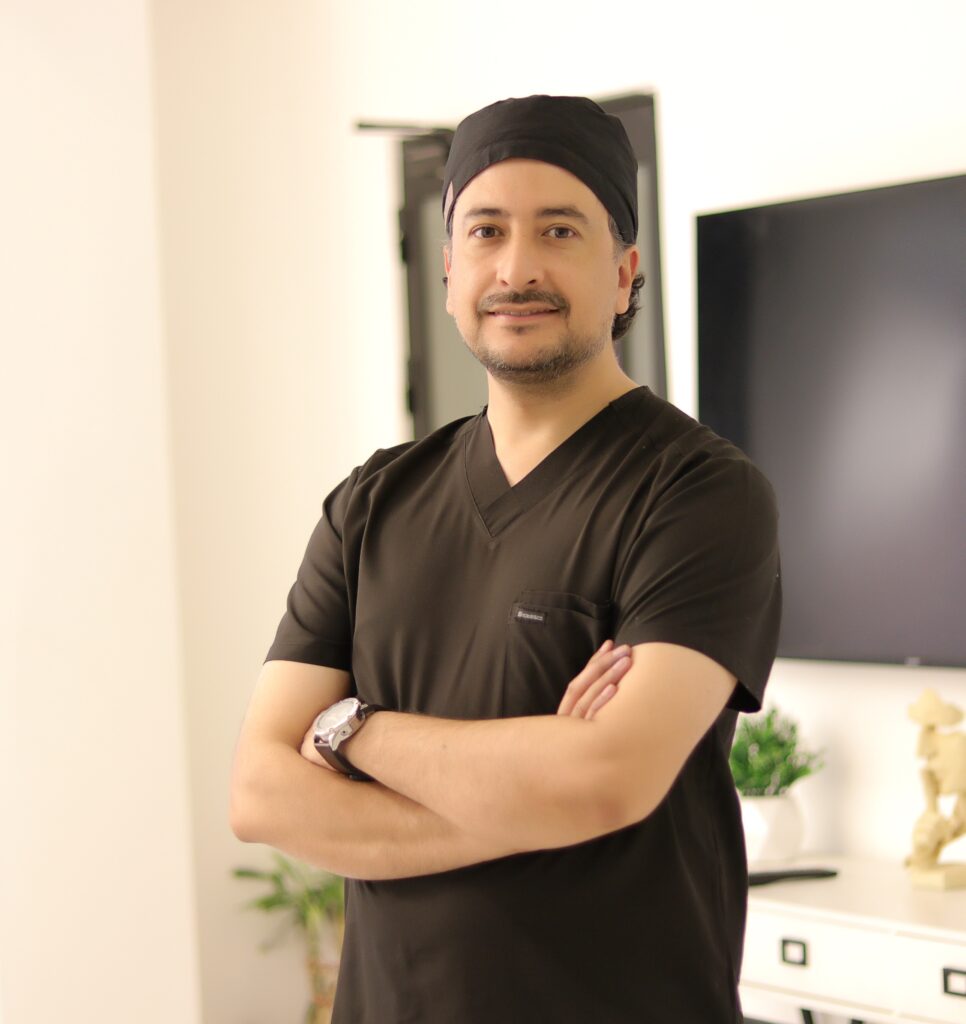
At JJ Aesthetics, patients seeking natural-looking hair restoration can consult with Dr. Jawad Jahangir, an experienced hair transplant surgeon, for assessment and treatment planning.
Benefits of Hairline Restoration:
- Rejuvenates and restores a thinning top of the hair.
- Enhances the density of the front hairline.
- Can minimize the look of a high forehead.
- Masks uneven hairlines to correct selected hairlines.
- Is able to produce a more harmonious look on the face.
- Can use hair follicles grown in your own body.
- Completes long term restoration if appropriate donor follicles are present.
- Can be performed for both men and women in suitable cases .
Final Thoughts:
Hair transplants can correct a lot of types of hairline issues – a receding hairline, frontal thinning, selected cases of high hairlines and some types of asymmetry of the hairline.
Instead, we strive to produce a natural appearing and custom hairline at JJ Aesthetics that will fit well with each patient’s facial structure rather than create an overly straight or artificial appearance. A professional evaluation can help decide if hair transplants in Islamabad are suitable and how many grafts you might need to achieve your desired results.